
Finding a casual job can be a practical way to earn money while studying, caring for family, building experience or managing other commitments.
Casual opportunities can be found across industries including retail, hospitality, warehousing, administration, events, customer service, cleaning, healthcare support and education.
However, applying for every available position without a clear strategy can quickly become frustrating. A more effective approach is to decide what work suits you, prepare a focused application and search consistently.
Here is a step-by-step process for finding casual jobs in Australia.
1. Decide What Type of Casual Work You Want
Begin by identifying the kinds of jobs that fit your skills, interests and availability.
- What days and hours can I reliably work?
- Can I work evenings, weekends or public holidays?
- How far am I prepared to travel?
- Do I have access to reliable transport?
- Do I prefer working with customers, working independently or doing physical work?
- Do I have any licences, checks or certificates?
- Am I looking for short-term work or an ongoing casual position?
For example, someone available on Friday evenings and weekends may suit retail, hospitality or event work. Someone available early in the morning may find opportunities in cleaning, warehousing, supermarkets or cafés.
Being realistic about your availability helps you focus on jobs you can actually accept and keep.
2. Search Using Specific Job Titles
Searching only for “casual jobs” may produce thousands of unrelated results.
Use specific phrases that reflect the work, location and schedule you want. Examples include:
- casual retail assistant Melbourne
- weekend café jobs Sydney
- casual warehouse jobs Brisbane
- evening jobs Perth
- casual receptionist Adelaide
- student jobs near me
- casual jobs no experience
- Christmas casual jobs
- school-hours casual jobs
- Saturday and Sunday jobs
Specific searches usually produce more relevant opportunities than broad searches.
On casual-jobs.com, job seekers will be able to search for casual work by keyword and location, making it easier to narrow down suitable vacancies.
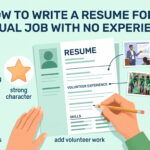
3. Create a Simple, Relevant Resume
Your resume does not need to describe every activity you have ever completed. It should show why you are suitable for the particular job.
Include:
- Your name and contact details
- A brief professional summary
- Relevant skills
- Employment or volunteer experience
- Education and training
- Certificates and licences
- Your general availability
- Two referees, or “Referees available on request”
For casual roles, employers commonly look for reliability, communication, teamwork, customer service, punctuality and the ability to learn quickly.
Where possible, support your claims with examples.
Instead of writing: “Good communication skills”
Write: “Communicated with customers, volunteers and team members while helping at school and community events.”
A separate resume should not be required for every application, but the content should be adjusted to match each advertisement. Workforce Australia recommends tailoring applications to the job advertisement and using relevant terminology from the advertisement.
4. Make Your Availability Easy to Understand
Availability can be one of the most important factors in casual recruitment.
Avoid vague statements such as:
Available most of the time.
Use a clear format:
Availability: Monday to Thursday after 4:00 pm, all day Saturday and Sunday, and additional hours during university holidays.
Do not claim to be available at times when you cannot reliably work. Employers may roster staff based on the information provided during recruitment.
You can also mention whether you are available for:
- Early morning shifts
- Evening shifts
- Overnight work
- Weekends
- Public holidays
- School or university holidays
- Short-notice shifts
Broad availability can help, but reliability is more important than promising every possible shift.
5. Apply Early
Casual vacancies can attract applications quickly, particularly when the role requires little previous experience.
Check job listings regularly and apply as soon as you find a suitable position.
Before submitting your application:
- Read the complete job description.
- Check the location and expected working hours.
- Confirm that you meet essential requirements.
- Adjust your resume summary and skills.
- Follow the application instructions.
- Proofread your application.
- Save a copy of the advertisement.
Saving the advertisement is useful because it may be removed before your interview.
6. Write a Short, Focused Application Message
Some casual positions require only a resume and a brief message.
A suitable application could say:
Hi, I am applying for the Casual Retail Assistant position. I have customer service experience from volunteering at community events and am available on weekday evenings and throughout the weekend. I am reliable, comfortable working in a busy environment and available to start immediately. My resume is attached for your consideration.
The message should be professional, specific and easy to read.
Avoid sending the same generic sentence to dozens of employers.
7. Prepare for a Quick Interview
Casual-job interviews may be brief, but you should still prepare.
Common questions include:
- Tell me about yourself.
- Why do you want to work here?
- What days are you available?
- How would you handle a difficult customer?
- Tell me about a time you worked in a team.
- Can you work during busy periods?
- How would you respond if you were running late?
- When can you start?
Use examples from previous employment, volunteering, school, university, sport, clubs or family responsibilities.
A simple answer structure is:
- Describe the situation.
- Explain what you needed to do.
- Describe the action you took.
- Explain the result.
8. Follow Up Professionally
When an advertisement includes a closing date, wait until after that date before following up.
For positions advertised as requiring an immediate start, a short follow-up after several business days may be appropriate.
For example:
Hi, I recently applied for the Casual Team Member position and wanted to confirm that my application was received. I remain very interested in the opportunity and am available to provide any additional information.
Avoid repeatedly contacting the employer. One professional follow-up is usually sufficient.
9. Keep Track of Your Applications
Create a simple spreadsheet or document containing:
- Employer
- Position title
- Location
- Date applied
- Contact person
- Application status
- Interview date
- Follow-up date
- Notes
Tracking applications prevents you from accidentally applying twice and helps you prepare when an employer contacts you.
10. Check the Employment Conditions
Before accepting a job, confirm:
- Whether the role is casual, part-time or contractor work
- The hourly pay rate
- The award or agreement that may apply
- Whether casual loading is included
- Expected hours
- Minimum shift length
- Weekend and public holiday rates
- Payment frequency
- Superannuation arrangements
- Uniform or equipment requirements
- Whether any trial shift is paid
Most employees receive their minimum pay rate through an award covering their industry or occupation. Rates can also vary according to age, classification and the work being performed.
Never assume that “cash in hand” means an employer does not have to follow employment laws.
How to Improve Your Chances of Getting Casual Work
Reliability
Arrive on time, respond promptly and attend agreed interviews and shifts.
Availability
Clearly explain when you can work, including weekends and busy periods.
Flexibility
Where possible, be open to different duties and shift times.
Presentation
Use a professional email address, check your spelling and answer calls politely.
Persistence
A rejected application does not necessarily mean your resume is poor. Employers may receive many applications or select someone whose availability more closely matches their roster. Continue applying, improve your application and expand your search into related job categories.
Start Searching for Casual Jobs
A focused job search is more effective than sending the same application everywhere.
Choose suitable job categories, present your availability clearly, tailor your resume and apply consistently.
Start exploring the latest casual opportunities on casual-jobs.com and find work that fits your schedule, location and experience.